




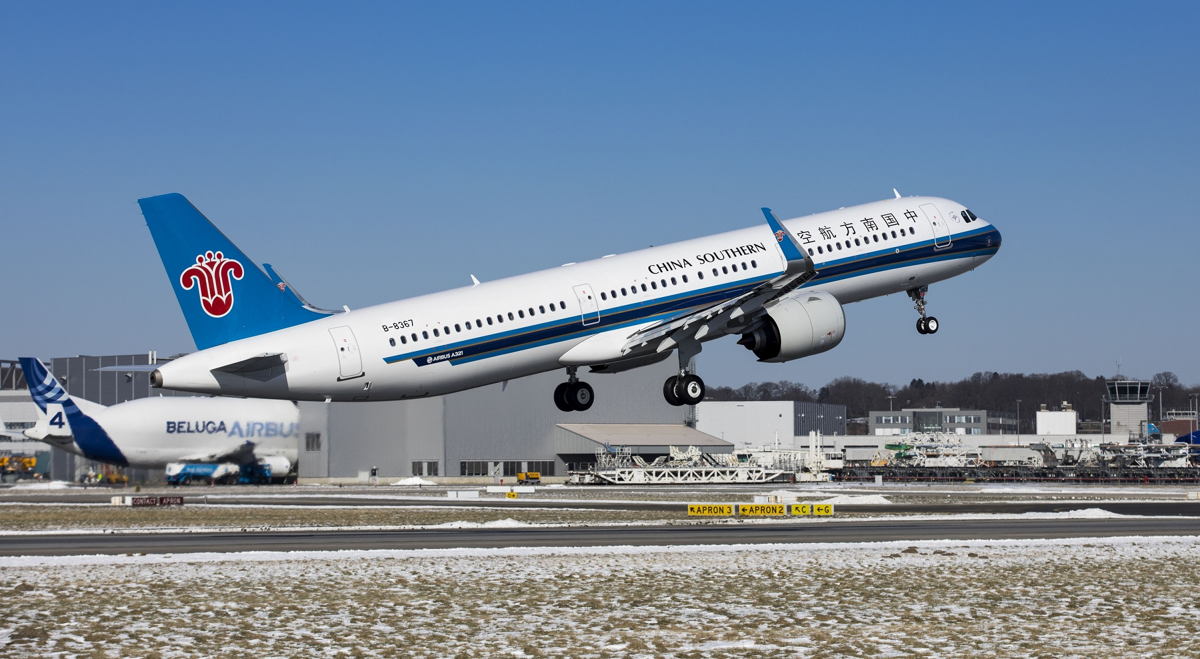
For shippers using international air freight, common questions keep popping up: Is this flight direct or connecting? Is transfer flight more cost-effective? Different shipping modes directly affect transit time, cost and cargo safety. This guide breaks down 4 core international air freight modes to help you pick the best solution for your cargo.
1. Direct Flight
A direct flight means your cargo departs from the origin airport and arrives at the destination airport on the same flight number. The flight may make a brief technical landing (for refueling or light unloading) en route, but it still counts as a direct flight.
Advantages
- Fast & stable transit time
- Lower risk of cargo loss or damage (no multiple transfers)
Disadvantages
- Higher freight rate compared to other modes
Example
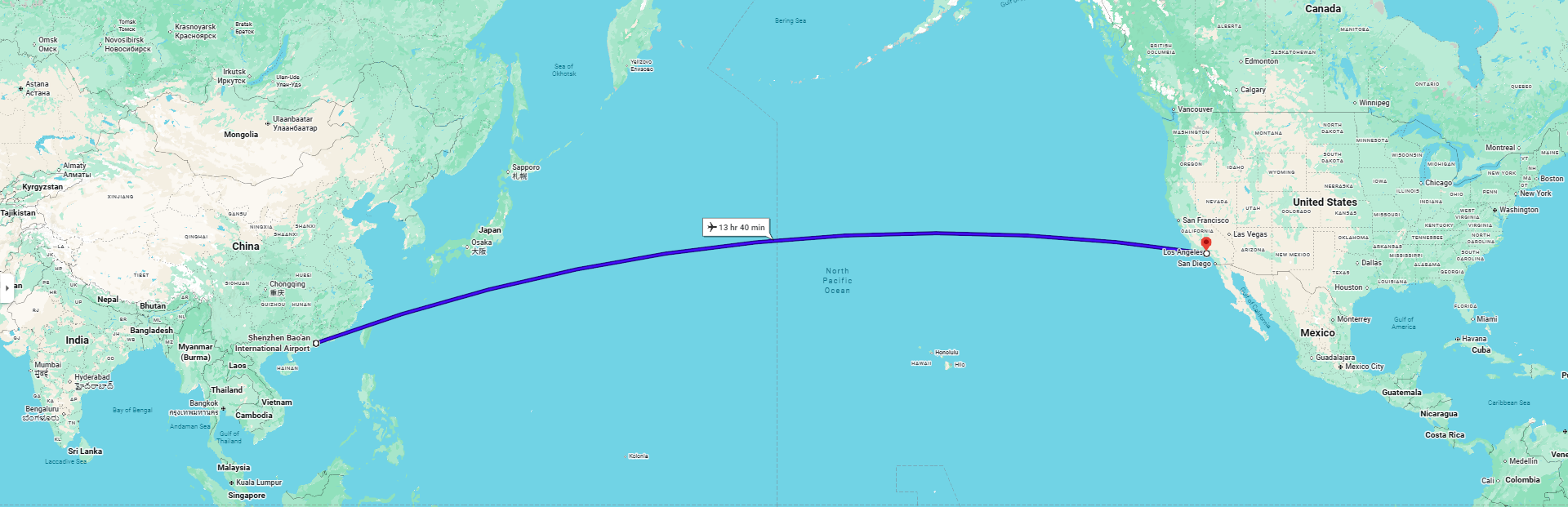
Air China’s direct route from Shenzhen Bao’an International Airport (SZX) to Los Angeles International Airport (LAX) takes about 13–14 hours. It’s widely used for high-value e-commerce cargo due to reliable transit.
2. Stopover Flight
A stopover flight lands at an intermediate airport, then continues to the final destination on the same aircraft—cargo does not change flights.
Stopovers fall into two categories:
- Technical stopover: For refueling, equipment checks (safety-focused)
- Scheduled stopover: For loading/unloading passengers or cargo (efficiency-focused)
Advantages
- Relatively efficient transit
- More route options on some lanes
Disadvantages
- Slightly longer transit than non-stop direct flights (depends on stopover duration)
Example
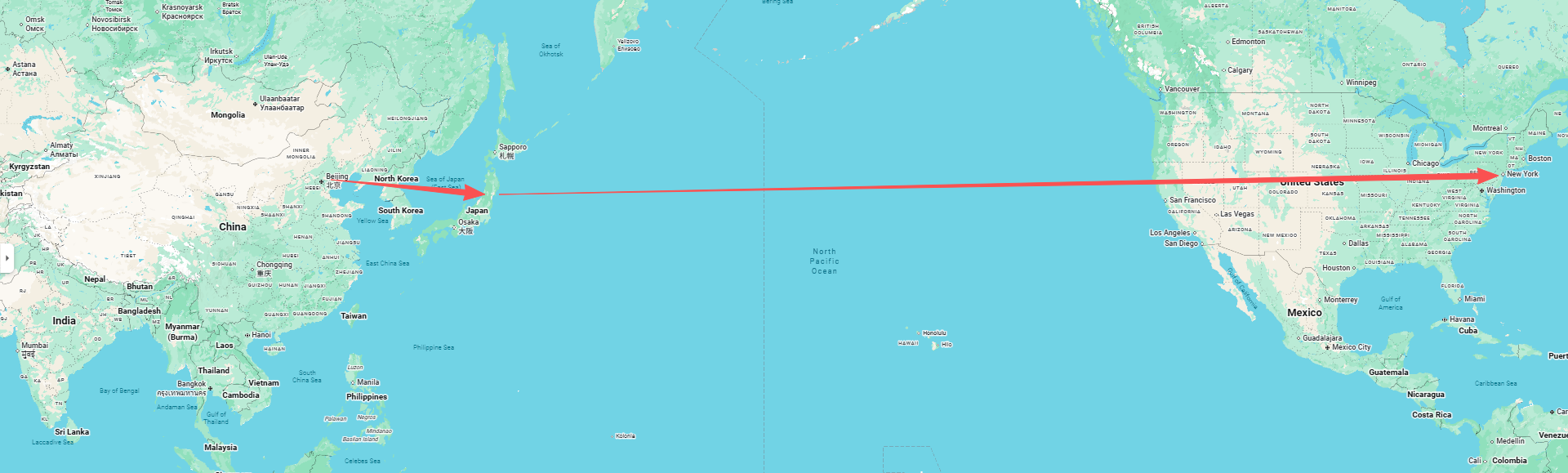
A flight from Beijing Capital International Airport (PEK) to New York JFK Airport stops at Tokyo Haneda Airport (HND) for refueling. Cargo stays on the same plane, so safety and transit stability remain strong.
3. Transfer Flight
A transfer flight (also called connecting/transit flight) requires cargo to be unloaded at an intermediate hub and reloaded onto a different flight to reach the destination. Airlines combine their networks to offer global coverage, especially for long-haul intercontinental routes.
The key difference from stopover: transfer = change aircraft; stopover = same aircraft.
Advantages
- Lower freight rates
Disadvantages
- More handling steps = higher cargo damage/loss risk
- Uncertain transit time (affected by weather, flight availability)
- Multiple transshipments may delay delivery
Example
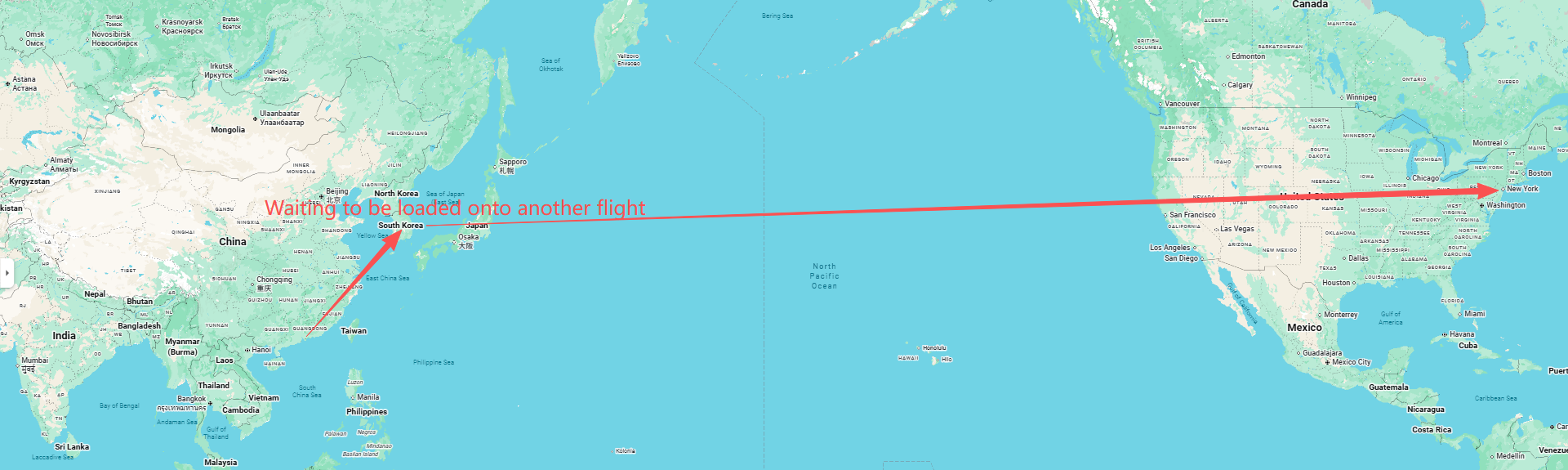
Cargo from Shenzhen (SZX) to New York (JFK) often transfers at Seoul Incheon International Airport (ICN), switching to a second flight for the final leg. Transfers can be single or multiple.
4. Multimodal Transport
Multimodal transport uses two or more transport modes (e.g., air + sea, air + land, air + rail) to move cargo from origin to destination via coordinated transshipment.
Advantages
- Combines the cost efficiency of each transport mode
- Optimizes overall logistics cost and resource utilization
- Flexible routing for global delivery
For international air freight, common multimodal options:
- Air-land multimodal transport
- Air-sea multimodal transport
- Air-rail multimodal transport
Example
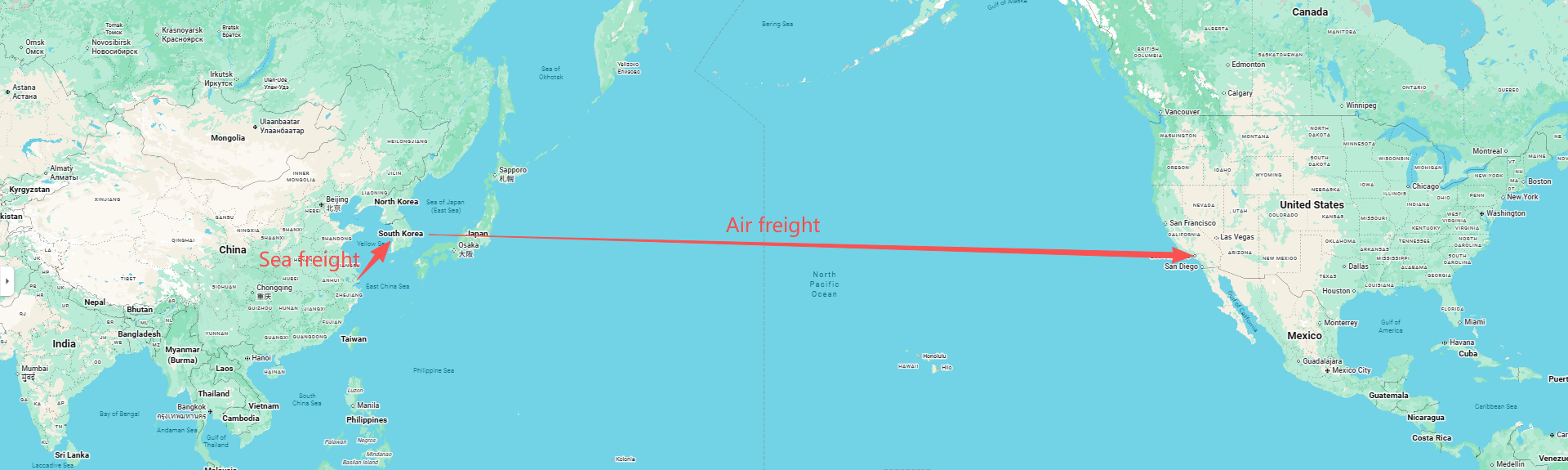
China-Korea-US/Europe air-sea multimodal transport: Cargo is consolidated in China → exported by sea to Incheon Port (South Korea) → trucked to Incheon Airport → loaded onto flights to US/European airports.
How to Choose the Right Air Freight Mode?
There is no universal “best” option—only the most suitable for your cargo.
- Choose direct flight for high-value, time-sensitive cargo
- Choose transfer flight or multimodal transport for budget-friendly shipping
- Final decision depends on cargo type, destination, budget and time requirements
If you need help selecting a shipping mode, feel free to contact our logistics specialists.


