




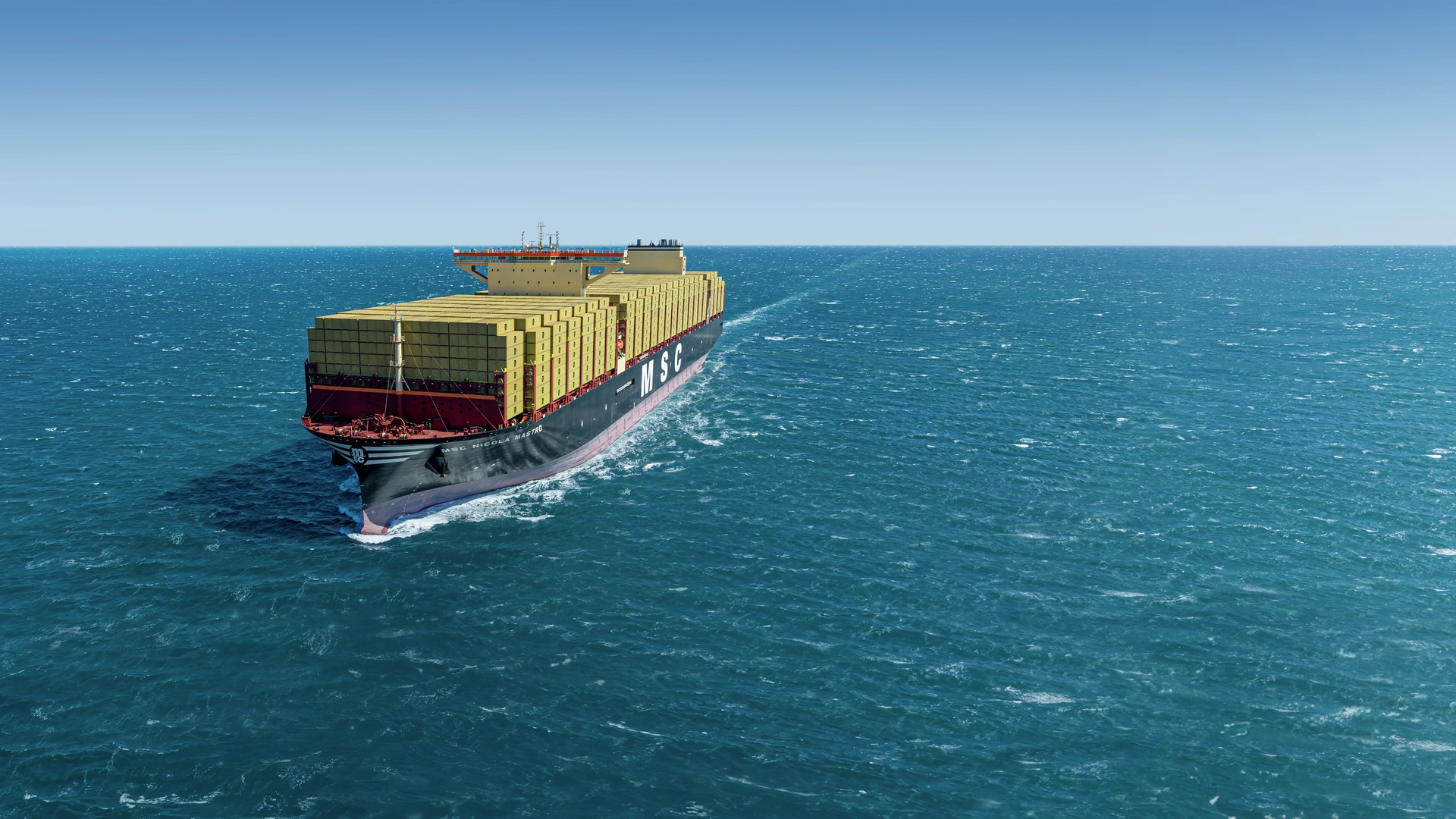
Il ritmo di aggiustamento nel 2026 il mercato globale del trasporto di container ha registrato una notevole accelerazione. Ad aprile 16, Compagnia di navigazione del Mediterraneo (MSC) annunciò una ristrutturazione sistematica del suo impero, Servizi Amberjack ed Emerald sulla rete Asia-Costa orientale degli Stati Uniti, che comportano aggiunte e rimozioni di scali portuali in Asia e Nord America.
Ciò segna un’altra importante ottimizzazione della rete transpacifica entro un mese, in seguito all’adeguamento di MSC di tre rotte Asia-Costa occidentale degli Stati Uniti all’inizio di aprile.
1.La doppia logica della sovraccapacità e dell’adeguamento delle rotte
La mossa di MSC non sorprende nel contesto della profonda correzione nel mercato globale del trasporto di container.
Dall'inizio del 2026, La domanda di merci transpacifiche è rimasta debole. Secondo la società di consulenza marittima Drewry, i volumi delle importazioni nei porti di Los Angeles e Long Beach sono diminuiti 8% E 5% anno dopo anno nel dicembre dello scorso anno. I dati di Linerlytica mostrano anche un calo dei volumi di merci transpacifiche 7.5% anno dopo anno, con una domanda complessiva persistentemente debole. Nel frattempo, continua a essere trasportata un'ondata di navi portacontainer ultra-grandi, espandere la capacità e ampliare il divario tra domanda e offerta.
Nonostante la domanda debole e la capacità in crescita, le tariffe di trasporto sono aumentate. Nel marzo di quest'anno, Le tariffe di trasporto della costa orientale dell'Asia e degli Stati Uniti sono state superate $3,000 dal FUOCO. Ciò è stato causato dalle navi di linea che hanno cancellato in modo aggressivo le partenze per ridurre l’offerta di slot e sostenere le tariffe. Un totale di 136 le partenze sono state cancellate sulle principali rotte, tra cui quella transpacifica e quella Asia-Europa, a febbraio, impennata 122% mese dopo mese.
La congestione dei porti continua a interrompere le catene di approvvigionamento. I dati di monitoraggio di marzo mostrano che le interruzioni degli orari nei porti statunitensi si sono diffuse da problemi localizzati a problemi a livello di settore: Newark è stata la prima ad affrontare le interruzioni, seguite da chiamate saltate di massa a Norfolk. Nello stesso mese, Hapag-Lloyd ha confermato nel suo aggiornamento sulle operazioni in Nord America che alcuni carichi sarebbero stati dirottati a Norfolk e New York invece che a Savannah e Charleston. In questo contesto, le navi di linea sono state costrette a ottimizzare in modo proattivo le sequenze di rotazione dei porti per ridurre i rischi di ritardo.
2. Le tre modifiche alla rotta di MSC: Focus diversi
Dal punto di vista generale, la logica fondamentale del recente aggiustamento di MSC è chiara: ridurre la dipendenza dai porti congestionati, ottimizzare la rete di copertura dei principali porti asiatici, e migliorare il tasso di puntualità delle rotte marittime. Il ruolo svolto dal porto di Qingdao in questo processo è particolarmente degno di nota: un percorso viene rimosso, mentre se ne aggiunge un altro, con conseguenti destini molto diversi.
Via dell'Impero: Esci da Qingdao, Aggiungi Norfolk e Port Everglades
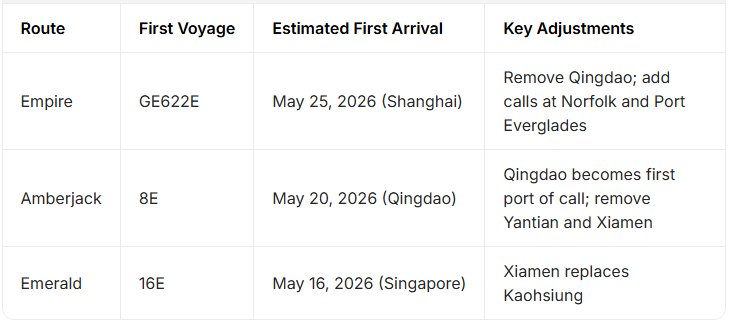
La rotta dell’Impero vede i cambiamenti più radicali. Il porto di Qingdao verrà escluso dalla rotazione, sostituito dai porti della costa orientale degli Stati Uniti Norfolk e Port Everglades; Jacksonville e Miami non verranno più chiamate.
Nuova rotazione: Shanghai – Ningbo – Busan – New York – Baltimora – Norfolk – Port Everglades – Rodman – Shanghai
Il viaggio inaugurale è GE622E, l'arrivo al porto di Shanghai è previsto per maggio 25, 2026.
MSC ha affermato che la sequenza portuale rivista ridurrà i rischi operativi derivanti dalla congestione portuale, migliorare l'affidabilità della pianificazione e la puntualità degli arrivi. L’aggiunta di uno scalo al porto Rodman di Panama sulla tratta di ritorno rafforza anche la connettività di trasbordo di MSC negli hub centroamericani, contribuendo ad allentare la pressione sulla congestione nei porti della costa orientale degli Stati Uniti dovuta alla volatilità dei flussi di importazione.
Itinerario della Ricciola: Qingdao come primo porto di scalo; Xiamen & Shenzhen fuori
La direzione di aggiustamento della rotta della Ricciola è quasi opposta a quella dell'Impero. Il porto di Qingdao si unirà a questa rotta e sarà impostato direttamente come il primo porto di scalo per le partenze dall'Asia.
La sequenza modificata delle porte è: Qingdao – Ningbo – Shangai – Pusan – Manzanillo – Cartagena – Charleston – Savana – Jacksonville – Kingston – Pusan – Qingdao
Il porto di Yantian e il porto di Xiamen verranno rimossi da questa rotta, mentre il porto di destinazione della East Coast è stato cambiato da Norfolk a Jacksonville.
La prima nave di questa rotta, viaggio 8E, l'arrivo al porto di Qingdao è previsto per maggio 20, 2026.
Questa regolazione invia molteplici segnali: Innanzitutto, Lo status del porto di Qingdao come primo porto di scalo sulla rotta della ricciola significa che le merci caricate a Qingdao godranno di tempi di transito complessivi più rapidi.
In secondo luogo, la rotta Amberjack ha aggiunto Kingston Port come nuovo scalo nella regione dei Caraibi, e ha stabilito una rete di transito centroamericana attraverso Manzanillo (Messico) e Cartagena (Colombia), ottimizzando ulteriormente la struttura del percorso. MSC afferma che ciò contribuirà a migliorare i tempi di transito complessivi e a ottimizzare la copertura dei porti con una struttura di rete più stabile.
Via dello Smeraldo: Kaohsiung fuori, Xiamen In
L'adeguamento del percorso Smeraldo nel terzo articolo sarà relativamente snello, con la rimozione del porto di Kaohsiung e la sostituzione del porto di Xiamen come ultimo porto di scalo per le partenze asiatiche.
La sequenza di attracco della rotta Smeraldo modificata è: Singapore Vung Tau Haiphong Yantian Xiamen Kingston Charleston Savannah New York Boston Singapore
La prima nave di questa rotta è il viaggio 16E, l'arrivo al porto di Singapore è previsto per maggio 16, 2026.
Dal punto di vista della regolazione della direzione, MSC ha posizionato il porto di Xiamen come ultima tappa dall'Asia alla costa orientale degli Stati Uniti. Le merci esportate da Xiamen verranno attraccate direttamente nei tre porti principali della costa orientale degli Stati Uniti, Charleston, Savana, e New York, attraverso questo percorso. Rispetto alla modalità precedente di richiedere il trasbordo tramite altro
porti, il servizio di spedizione diretto da Xiamen alla costa orientale degli Stati Uniti è chiaramente più competitivo.
3. Due grandi revisioni in un mese: Cos'è MSC Planning?
Questa è la seconda volta in un mese che MSC rivede le sue rotte Asia-Nord America. All'inizio di aprile, ha ottimizzato tre rotte Asia-costa occidentale degli Stati Uniti (Oriente, Sentosa, Chinook), aggiungendo o eliminando anche porti asiatici tra cui Qingdao, Xiamen e Haiphong. Una seconda importante modifica alle rotte della costa orientale degli Stati Uniti in meno di un mese sottolinea l’intensa attenzione di MSC alla sua rete transpacifica.
L’approccio generale, ovvero l’ottimizzazione degli scali portuali per limitare l’esposizione alla congestione e migliorare la puntualità, affronta la sfida più grande del settore. Il lancio di tutte e tre le rotte riviste tra metà e fine maggio mostra che MSC intende finalizzare la revisione della rete prima della tradizionale stagione di punta delle spedizioni.
Anche se raddoppia gli aggiustamenti del percorso, MSC continua ad espandere la capacità. Questo mese, è diventata la prima nave portacontainer nella storia a gestire una flotta di Sopra 1,000 vasi, con capacità totale di 7.3 milioni di TEU, circa 57% superiore a Maersk, al secondo posto. Dall'inizio del 2026, MSC ha inoltre acquisito attivamente navi di seconda mano per ampliare la propria flotta di proprietà.
4. Logica alla base dei cambiamenti di percorso
All'a macro livello, MSCIl ciclo di aggiustamenti di riflette due importanti cambiamenti in corso nel trasporto di container:
Primo, dall'espansione al posizionamento di precisioneIn mezzo al surplus di capacità, la semplice aggiunta di rotte non garantisce più la redditività. L'ottimizzazione sistematica delle rotazioni dei porti consente ai transatlantici di migliorare efficienza patrimoniale senza aggiungere capacità, migliorando al tempo stesso l'esperienza del cliente. MSCL’attenzione di “ridurre l’esposizione alla congestione e migliorare la puntualità” incarna questo cambiamento.
Secondo, un sottile ma significativo cambiamento nella classifica dei porti “one out” del porto di Qingdao, one in” lungo le tre rotte della costa orientale degli Stati Uniti si assicura lo status di prima chiamata su Amberjack, confermando il proprio ruolo strategico MSCLa rete transpacifica di è stata rafforzata attraverso un’assegnazione più mirata delle rotte. L’ingresso del porto di Xiamen nel Smeraldo itinerario, in sostituzione di Kaohsiung, evidenzia inoltre la sua crescente competitività nei servizi diretti sulla costa orientale degli Stati Uniti.
Terzo, persistente incertezza In 2026 spedizioneIl ritmo del Mar Rosso normalizzazione, sviluppi in Medio Oriente, e la direzione della politica tariffaria statunitense rimangono variabili importanti per la pianificazione delle rotte. Linerlytica prevede che i volumi di merci transpacifiche rimarranno deboli per tutti 2026, soprattutto durante la tradizionale finestra di punta di giugno-settembre. In questo mercato, rete di rotte raffinata capacità operative sarà il principale elemento di differenziazione tra le navi di linea.
Per spedizionieri e spedizionieri:
Monitorare attentamente le prestazioni effettive delle tre rotte riviste dopo i loro viaggi inaugurali tra la metà e la fine di maggio, in particolare, la puntualità nei nuovi porti di scalo sulla rotta Empire e l’impatto sull’efficienza del transito dello status di primo scalo di Qingdao sulle merci della Cina orientale. Se esporti regolarmente da Xiamen verso la costa orientale degli Stati Uniti, il nuovo servizio diretto sulla tratta Smeraldo potrebbe portare un notevole risparmio di tempo.


