





Reliable rail freight companies help businesses strengthen transcontinental supply chains. By coordinating cross-border rail transport, customs documentation, and inland delivery, they support efficient international cargo movement. Meanwhile, China-based freight forwarders help importers balance transportation costs, cargo capacity, and delivery schedules.
For manufacturers and distributors, transcontinental rail logistics offers a practical option for medium- and long-distance shipments. Furthermore, rail freight can connect production hubs, inland terminals, and major distribution centers across Eurasia. However, every route requires careful planning around transit windows, border procedures, and destination requirements.
Huazong Logistics provides Transcontinental Rail Logistics services through partnerships with major rail operators. Its international freight forwarding capabilities help businesses coordinate shipments from China to overseas markets.
Explore Our International Freight Services

How Can Rail Freight Companies Balance Cost and Transit Time?
International buyers often need to balance transportation budgets with inventory requirements. Meanwhile, air freight may suit urgent shipments, while ocean freight can accommodate large-volume, less time-sensitive orders. Rail freight offers another option for suitable overland corridors.
However, its value depends on the complete transportation plan. Pickup, terminal handling, customs clearance, and final delivery all influence total shipping time. Therefore, importers should evaluate door-to-door estimates instead of relying solely on rail transit figures.
Technical Solution: Build a Route-Specific Transit Plan
Professional rail freight companies should assess the origin, destination, cargo profile, and requested delivery window. Next, they should separate estimated line-haul transit from collection and delivery stages. This process gives buyers a clearer basis for inventory planning.
Huazong coordinates rail freight options through its operator network. Additionally, its freight forwarding services help customers evaluate logistics arrangements around their shipment requirements. Businesses should request current schedules and written quotations before confirming bookings.
How Can Transcontinental Rail Logistics Handle Different Cargo Volumes?
Manufacturers frequently ship machinery, industrial components, construction materials, and finished products. Meanwhile, shipment dimensions and cargo density influence equipment selection and transport costs. Consequently, rail planning should start with accurate cargo information.
Oversized packages may require special handling or alternative routing. Similarly, certain commodities may face restrictions or additional documentation requirements. Therefore, rail freight companies must confirm cargo acceptance before arranging transportation.
Technical Solution: Match Cargo Data to Transport Capacity
Importers should provide gross weight in metric tons and shipment volume in cubic meters. They should also submit package dimensions, quantities, commodity descriptions, and applicable tariff codes. These details help the forwarder assess routing and handling requirements.
Additionally, businesses should identify fragile goods, temperature-sensitive products, and regulated commodities early. Huazong can coordinate shipment requirements with relevant transport partners. As a result, customers can clarify equipment suitability and service scope before dispatch.
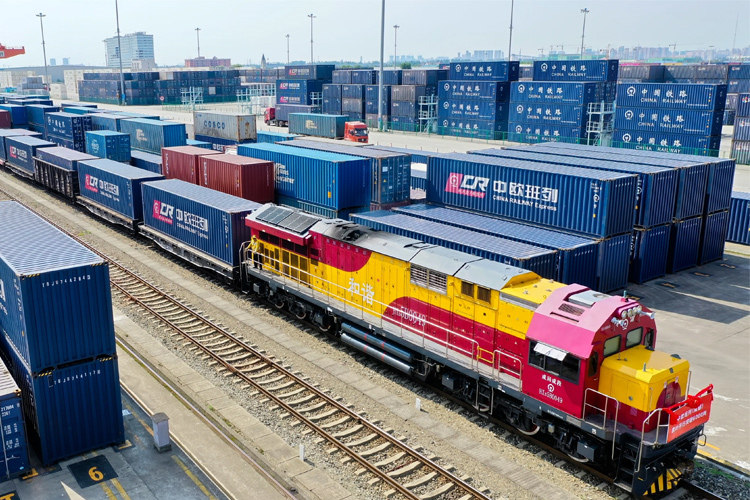
How Can Rail Freight Companies Manage Cross-Border Logistics?
Transcontinental shipments often cross several national borders. Meanwhile, different rail systems may require changes in handling procedures or container transfers. Customs documentation and terminal capacity can also influence shipment progress.
China-Europe rail freight illustrates the importance of cross-border coordination. A January 2025 government update reported connections reaching 227 cities across 25 European countries. It also reported connections to more than 100 cities across 11 Asian countries. These figures illustrate the corridor’s reach, although individual services cover specific routes. Source: China’s State Council Information Office.
Technical Solution: Coordinate Customs and Terminal Handoffs
A reliable forwarding plan identifies the departure terminal, destination terminal, border crossings, and responsible service partners. Next, the team confirms documentation requirements and shipment handoff procedures. This approach helps reduce avoidable coordination gaps.
Furthermore, importers should confirm who handles export declarations and destination customs arrangements. They should also clarify duties, taxes, inspections, and local delivery charges. Huazong helps coordinate international freight services around these operational requirements.
How Can Rail Freight Companies Improve Cost Visibility and Tracking?
Freight quotations can cover different services, making direct comparisons difficult. Meanwhile, origin fees, destination charges, storage, and final delivery can affect total logistics expenditure. Therefore, importers should review the full quotation before choosing a provider.
Tracking also supports better coordination between suppliers, warehouses, and receiving teams. However, visibility depends on the tracking system and information supplied by transport partners. Businesses should confirm available milestones and update frequency before booking.
Technical Solution: Establish Measurable Shipment Controls
First, compare quotations using identical cargo details and service boundaries. Next, review pickup charges, rail freight rates, terminal fees, customs services, and destination delivery costs. Finally, confirm quotation validity and any conditions affecting theagreed service.
For tracking, request updates at key milestones. These may include cargo collection, terminal receipt, departure, border handling, arrival, and final delivery. Consequently, purchasing teams can prepare inventory and respond more effectively to schedule changes.
Hucombines China-origin logistics coordination with international freight services. Its solutions help businesses assess practical shipping arrangements while keeping costs and operational responsibilities visible.
Read Our International Logistics Technical Guide

Rail Freight ServiceParameters and Verification Checklist
The following table outlines key planning details. Actual service parameters depend on the selected route, carrier, and cargo requirements.
|
Parameter |
Information to Confirm |
Operational Purpose |
|---|---|---|
|
Cargo profile |
Gross weight in metric tons, volume in cubic meters, and package dimensions |
Supports capacity and handlingassessment |
|
Route coverage |
Origin, destination, terminals, and border crossings |
Confirms service availability |
|
Transit estimate |
Pickup, terminal handling, rail transit, customs, and delivery |
Supports inventory planning |
|
Freight charges |
Origin fees, rail rate, destination fees, and local delivery |
Improves budget visibility |
|
Cargo eligibility |
Commodity details, tariff codes, and special handling needs |
Helps confirm acceptance requirements |
|
Tracking |
Available milestones and update frequency |
Supports shipment monitoring |
|
Qualifications |
Applicable licenses, carrier arrangements, and route-specific documents |
Supports provider and service verification |
China-based freight forwarding can offer practical value when teams coordinate origin services and international transport efficiently. Nevertheless, importers should evaluate total cost, communication quality, and route suitability together. A competitive quotation should explain its service scope clearly.
Q&A
What makes rail freight companies suitable for transcontinental shipping?
They coordinate long-distance rail transport, route planning, documentation, and cargo handoffs. Therefore, they can help businesses balance shipping costs and delivery requirements on suitable corridors.
Is rail freight from China suitable for every shipment?
Not necessarily. Rail suits many industrial and commercial shipments, but route coverage, cargo restrictions, and delivery deadlines determine suitability.
How can importers estimate rail freight costs accurately?
Provide cargo weight, volume, dimensions, commodity details, origin, and destination. Then request a quotation covering applicable origin, rail, customs, and delivery charges.
Why consider Huazong for transcontinental rail logistics?
Huazong offers international freight forwarding and rail transport coordination through its logistics network. Importers can discuss route availability, shipment requirements, and quotations to develop a practical transportation plan.