




Cargo volumes at the Port of Los Angeles remain at elevated levels, signaling a noticeable shift in the timing of the traditional US import peak season.
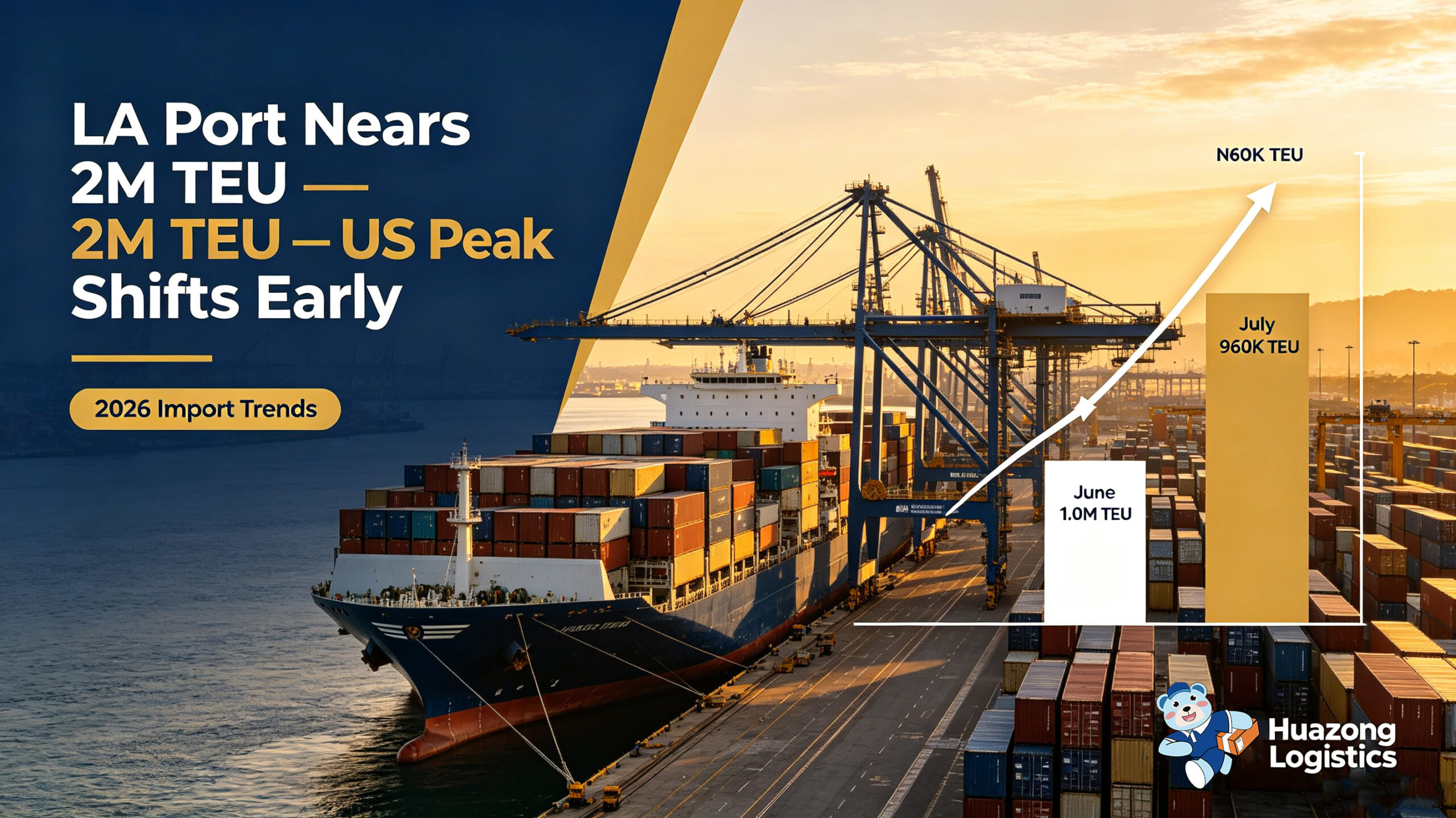
On August 18, the Port of Los Angeles released official data showing it handled 960,464 TEU in July 2026, marking the second-highest July throughput in the port’s history. This follows a record-breaking June, when monthly volume topped 1,002,734 TEU. Together, the two months account for nearly 2 million TEU of container throughput.
However, this sustained high volume does not necessarily mean a traditional peak season is starting earlier than usual. Industry analysts widely agree that the 2026 US import peak has been front-loaded: cargo that would normally arrive in later months has already entered the US market ahead of schedule.
At the same time, amid shifting global shipping routes, the Port of Los Angeles is proactively preparing for potential additional cargo volumes in the months ahead.
July Volume: Second-Highest July on Record
July’s 960,464 TEU represents a 6% drop from the all-time July record set in 2025, but still stands 7.5% above the five-year average for the month.
Breakdown of July 2026 volumes:
- Loaded imports: 499,552 TEU, down 8% year over year
- Loaded exports: 111,776 TEU, down 8% year over year
- Empty containers: 349,137 TEU, down 2% year over year
For the first seven months of 2026, total throughput reached 6,083,067 TEU, up 1.8% compared with the same period in 2025. In other words, while July came in below the exceptional highs of 2025, overall year-to-date volume at the Port of Los Angeles continues to grow.
Why Cargo Is Arriving Early: Tariffs and Supply Chain Uncertainty
July’s strong numbers are not an isolated trend. June marked the first time the port ever surpassed the 1 million TEU mark in a single month. Combined, June and July reached approximately 1.963 million TEU.
Analysis from the National Retail Federation (NRF) and other industry bodies points to a clear early peak pattern in US imports this year. Many retailers and importers have rushed goods into the US early to hedge against tariff changes and ongoing supply chain uncertainty stemming from Middle East tensions.
Jonathan Gold, Vice President of Supply Chain and Customs Policy at NRF, stated that retailers are importing goods earlier this year both in response to tariff shifts and to mitigate supply chain risks linked to ongoing Iran-related tensions.
This means cargo that would traditionally arrive in late summer and fall peak season has already been shipped and received. While current volumes at Los Angeles remain strong, there is uncertainty over whether this pace can be sustained in the months ahead.
August Volume Expected to Remain Strong
Port officials remain optimistic about August performance. Port of Los Angeles Executive Director Gene Seroka said August is on track to deliver another strong month, but acknowledged that cargo typically arriving later in the traditional peak season has already moved forward. This points to a clear shift forward of the 2026 US import peak.
According to the Global Port Tracker by NRF and Hackett Associates, major US container ports handled an estimated 2.21 million TEU of imports in July, with August projected at 2.22 million TEU.
Import volumes are expected to ease further into the fall. For the full year, total US imports are forecast to reach approximately 25.5 million TEU, roughly on par with 2025 levels. The most accurate current reading is that US import demand has been pulled forward by tariff risks and supply chain concerns, rather than growing significantly overall.
Port Prepares for 5% Potential Volume Increase
Beyond current volumes, the Port of Los Angeles is also monitoring potential additional cargo flows driven by global shipping route changes.
According to AJOT, Gene Seroka told a media briefing on August 18 that the port is preparing operations for a potential 5% increase in cargo volume. This proactive planning is based on ongoing consultations with terminal operators, shipping lines, harbor trucking associations and longshore labor groups.
A key variable behind this preparation is the shifting global shipping network.
Suez and Panama Canal Shifts Could Reshape Cargo Flows
Seroka noted that prolonged Red Sea security concerns have continued to disrupt the Suez Canal route, with some vessels opting to reroute around the Cape of Good Hope. Rerouting means longer transit distances, higher fuel consumption and elevated shipping costs.
If East Coast and Gulf Coast ports face growing disruption from route changes, some cargo may shift back to West Coast entry points such as Los Angeles.
Meanwhile, low water levels at the Panama Canal remain another factor influencing cargo routing between US coasts. Previous drought-related restrictions reduced canal transit capacity. A recurrence could push additional cargo to re-evaluate its US entry path.
For this reason, the Port of Los Angeles is not only monitoring its own volume trends, but also proactively preparing for potential cargo diversion driven by changes in key global shipping corridors.
Key Takeaways for Freight Forwarders
Current data confirms that cargo volumes at Los Angeles remain at high levels. June topped 1 million TEU, July reached 960,000 TEU, and year-to-date throughput is up 1.8%.
At the same time, this year’s US import peak is clearly front-loaded, driven by tariff changes and supply chain uncertainty. Going forward, two opposing forces will shape the US market:
- Early import pull-forward may lead to softer volumes in the later traditional peak season
- Middle East tensions, Suez diversions and Panama Canal conditions could trigger new cargo flow shifts
The Port of Los Angeles has confirmed it has capacity to handle additional volume and is preparing for a potential 5% uplift.
For freight forwarders, key metrics to monitor include monthly throughput at West Coast ports such as Los Angeles and Long Beach, as well as carrier route adjustments, space availability and rate movements.
Navigate US West Coast Shipping With Huazong Logistics
As an experienced freight forwarder with mature US trade lane capabilities, Huazong Logistics helps shippers navigate the shifting US import peak and West Coast port dynamics:
- Guaranteed Space Booking – Secure confirmed vessel space to Los Angeles, Long Beach and other major US West Coast ports, even during peak volume periods.
- Proactive Schedule Visibility – Real-time tracking of vessel ETAs, port congestion status and terminal yard conditions, so you can plan inventory and distribution with confidence.
- End-to-End US Delivery – Full-service support including export customs clearance in China, ocean freight, US import clearance, drayage and final-mile trucking across the US.
- Flexible Routing Options – When route disruptions occur, we offer alternative West Coast, East Coast or intermodal solutions to keep your cargo moving on schedule.
For businesses shipping to the US amid shifting peak seasons and global route changes, Huazong Logistics delivers stable, reliable West Coast logistics support.


